1. Gather Inputs
We collect sequencing inputs and artifacts (FASTQ/BAM/CRAM, pipeline definition, references, baseline VCF outputs) with full traceability. Nextflow workflows are fully supported.
Built for Genomic Variant Pipelines
We test how much your genomic variant outputs shift when normal pipeline updates happen. You get clear evidence of what is stable, what is fragile, and where operational risk is hiding.
Scope boundary: computational stability only. We do not provide biological interpretation, biological claims, clinical recommendations, or causal claims.
Methodology
A focused six-step process that turns genomic pipeline variability into clear, decision-ready evidence.
We collect sequencing inputs and artifacts (FASTQ/BAM/CRAM, pipeline definition, references, baseline VCF outputs) with full traceability. Nextflow workflows are fully supported.
Before any stress testing, we verify we can faithfully reproduce your current output.
Together, we choose realistic genomics changes: reference build updates, variant caller version updates, and threshold adjustments.
We run each change in isolation so you can clearly see cause and impact.
We quantify drift in variant calls and highlight unstable variants and ranking shifts.
You receive a concise report, machine-readable files, and a walkthrough for your team.
Deliverables
Decision-ready assets built for leadership visibility, technical execution, and audit-ready follow-through.
A polished, leadership-ready summary of what was tested, what changed, and what matters most for confidence, risk, and next milestones.
A structured metrics package your team can immediately use in internal reviews, partner diligence, and quality governance discussions.
A focused watchlist showing which variants appear, disappear, or materially change rank when routine pipeline conditions shift.
Ready-to-open IGV session bundles for visual review, plus full run traceability so every conclusion can be tracked back to exact execution context.
Sample output
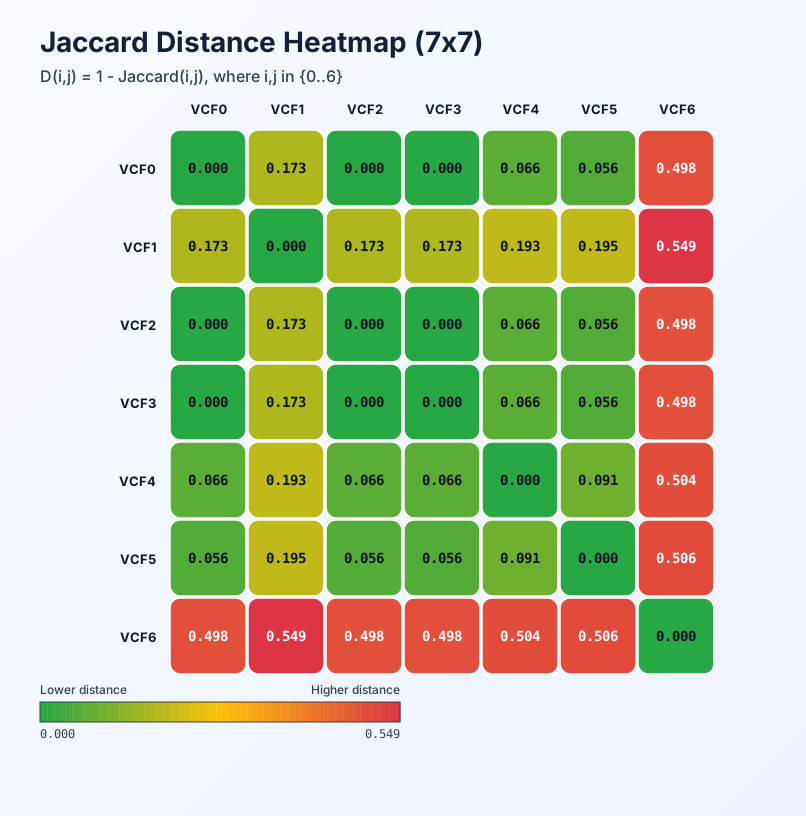
Heatmap comparisons show where outputs remain stable and where they diverge as pipeline conditions change.
Operational Guardrails
Every finding is structured to stay reproducible, attributable, and defensible under review.
Every run is isolated so findings reflect real genomic pipeline changes, not environment noise.
Each output is linked to a run identity and provenance record for clean review.
We normalize VCF outputs so formatting differences are not mistaken for meaningful computational pipeline change.
Findings are framed as computational stability signals only, never biological conclusions or clinical claims.
Engagement Model
Flexible engagement paths built around clarity, speed, and measurable confidence in your genomic pipeline outputs.
Most common
Best for a first-pass genomic risk readout before major internal or external milestones.
Recurring reviews for teams with evolving pipelines and repeated reporting needs.
Documentation package designed for internal QA, partner diligence, and leadership confidence.
Start Engagement
Share your sequencing setup and upcoming milestone. We will send back a practical engagement outline for your genomic pipeline review.